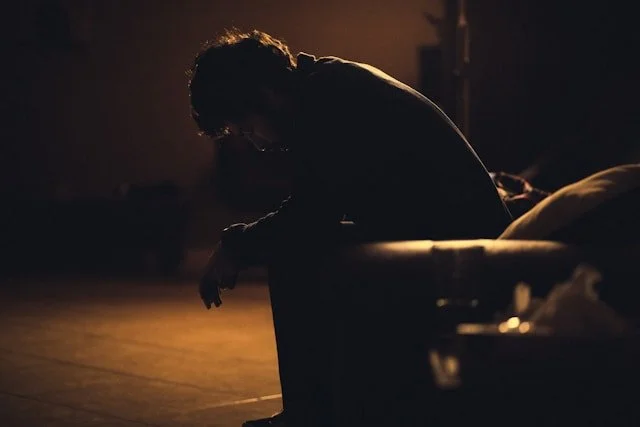
Boardroom or Bedroom?

The One Relationship Skill High-Achievers Never Learned

You built the career. You close deals, lead teams, and navigate high-stakes negotiations with skill. And every night, you come home to the one relationship that matters more than any of them.

So why does it keep falling apart?

Here is what most high-achieving people never see: the skills that earned you success at work are the same skills quietly damaging your relationship at home.


When the Boardroom Follows You Home

In the boardroom, you prepare your case. You argue your position. You fight to be right. That is how things get done. That is how you win.

The problem is that your partner is not the opposition, and your marriage is not a negotiation with a winner and a loser.

When those two worlds collapse into each other, the result is not resolution. It is distance.

You walk away technically correct, and emotionally alone.

"You can either be right or you can be married."

— Dr. John Gottman, relationship researcher and author of The Seven Principles for Making Marriage Work

Gottman did not say this to be clever. He said it because four decades of research on thousands of couples showed him the same pattern again and again: the couples who fought to win their arguments lost their connection. The couples who stayed connected fought differently.


What the Research Actually Shows

There is a myth about happy couples that marriage counseling work dispels almost immediately: the idea that successful partnerships are ones where two people rarely argue.

That is not what the data shows.

What Gottman's research revealed — famously, in what became known as the Love Lab at the University of Washington — is that the difference between couples who thrived and those who eventually separated had almost nothing to do with how often they argued.

It had everything to do with what happened inside the argument.

"Happy couples aren't those who never argue. They're those who communicate during fights in a way that says: I'm mad, but we're still a team."

— Dr. John Gottman, The Seven Principles for Making Marriage Work

That signal, "we are still a team," is not delivered through silence or surrender. It is delivered through something Gottman calls a repair attempt.


The Relationship Skill Nobody Taught You: The Repair Attempt

A repair attempt is exactly what it sounds like: any word, gesture, or action that de-escalates tension during a conflict and signals that the relationship matters more than the argument.

It does not mean you stop disagreeing. It does not mean someone backs down or pretends to be fine. It means you interrupt the spiral before it does damage that takes days to undo.

Most couples come to marriage counseling with a pattern they cannot quite name. They describe it as "we always end up in the same fight" or "things escalate so fast." What they are actually describing is a conversation that has never learned to repair itself.

What Repair Looks Like in Practice

Repair attempts are not grand gestures. They are small, deliberate ones. And they work because they change the emotional signal being sent between two people mid-conversation.

Here is what that can look like:

Reaching for your partner's hand even though you are still disagreeing about the weekend plans. The disagreement continues, but the touch says: you are not my enemy.

Softening your tone mid-sentence when you hear yourself getting sharp. Not because you were wrong to feel what you felt, but because you caught yourself using a weapon instead of words.

Saying "I hear you" before you explain why you see it differently. Listening to understand before trying to be understood.

Pausing and naming what is happening: "I am getting defensive. Can we start over?" Or: "Can you say that last part differently? The way it landed put me on guard."

"Repair attempts are the secret weapon of emotionally intelligent couples. It's not about eliminating conflict. It's about catching yourself before you damage what you are trying to protect."

— Dr. Sue Johnson, Hold Me Tight: Seven Conversations for a Lifetime of Love

When I work with couples in marriage counseling, I often notice the exact moment a repair attempt was available and missed. One partner's face shifts. Their posture changes. Something landed wrong. The other partner, still in argument mode, does not see it because they are busy building their next point.

That missed moment is where the spiral begins.


Why High-Achievers Miss the Repair Window

People who are skilled at debate and persuasion are often the worst at noticing repair windows, not because they do not care, but because they have been trained to stay on offense.

In a boardroom, the person who pauses and says "let me check in, are you okay?" is giving ground. In a relationship, that person is saving it.

The translation does not happen automatically. It requires unlearning, which is one of the reasons that couples who seek marriage counseling often report being surprised by how much of what they learned at work was actively harming their relationship at home.

"We carry our relational patterns everywhere. The question is whether we are using them for connection or control."

— Esther Perel, Mating in Captivity

There is also a neurological layer to this. During escalating conflict, the brain registers threat. Heart rate climbs. The prefrontal cortex, the part responsible for empathy, nuance, and problem-solving, goes offline. Gottman called this "flooding," and it is the reason that people who are otherwise thoughtful and measured say things in arguments that they cannot believe came out of their mouths.

Repair attempts work in part because they interrupt flooding. They are a circuit breaker. They give both partners just enough oxygen to remember who they are to each other.


Learning to Fight in a Way That Keeps You Close

The goal of marriage counseling is never to stop couples from fighting. Conflict is a natural, inevitable part of intimacy. Two people with different histories, different needs, and different nervous systems are going to disagree.

The goal is to fight in a way that does not erode what you are trying to protect.

That means learning to notice, in real time, when a conversation is starting to spin. It means developing the awareness to catch yourself and interrupt. It means building a shared language with your partner so that "can we start over" actually means something, rather than feeling like a manipulation tactic.

"Conflict is not the enemy of love. Distance is. And distance is almost always built one missed repair attempt at a time."

— Dr. Stan Tatkin, Wired for Love

This is learnable. It is not a personality trait you either have or do not. It is a skill. And like any skill, it develops with practice and with someone who can show you what you cannot yet see from inside the spiral.


Frequently Asked Questions About Counseling and Conflict

Does marriage counseling only work if both partners want to go?

Not necessarily. One partner making changes to how they show up in conflict can shift the entire dynamic. That said, the work goes faster and deeper when both partners are engaged. The free sample session is a useful way to see how it feels before committing.

What does a repair attempt sound like in real life?

It can be as simple as a touch, a pause, or a single sentence. "I love you even though I am frustrated right now." "I do not want to fight like this." "Can we take ten minutes and come back?" The content matters less than the intent it signals that I am still with you.

Is this the same as giving up or avoiding conflict?

No. A repair attempt is not a surrender. It is a strategic pause that allows the conversation to actually go somewhere useful, rather than cycling through the same escalation loop again. Avoiding conflict and interrupting escalation are very different things.

How long does marriage counseling take?

That depends on the couple, the history, and how embedded the patterns are. Many couples notice meaningful shifts within the first several sessions. Deeper structural changes in how you communicate often take longer. The first step is finding out where you actually are.


Ready to Fight Differently?

The couples who do the best work in marriage counseling are not the ones who have fallen apart. They are the ones who saw the pattern early enough to change it.

If the arguments feel like they go nowhere, or they leave both of you more distant than when they started, that is the signal worth paying attention to.

Schedule a free 50-minute sample session. We will look honestly at what is getting in the way and what becomes possible when you know how to fight in a way that keeps you close. No obligations. No pressure. 

How to Stop the Same Fight from Happening Over and Over | Communication in Marriage

"A couple having a serious but calm conversation”

It starts with the dishes, or the budget, or who forgot to call the plumber. But somehow it always ends up in the same place.  We repeat accusations, become defensive or walk away in silence. This does not solve the issue. If this sounds familiar, you are not dealing with willpower, but you are in a repeating pattern. The good news is patterns can be broken.

One of the most common things I hear from couples who come to marriage counseling in Atlanta is some version of: 'We keep having the same fight. We have talked about it a hundred times and nothing changes.'

Here's what I want you to understand: that fight is not really about what it seems to be about. The dishes are not about the dishes. The budget is not about the budget. Recurring arguments are almost always a symptom of an unmet emotional need beneath the surface. This occurs when neither partner has quite found the words to name the underlying issue yet.

The good news? Once you understand what is actually driving the cycle, communication in marriage becomes something you can genuinely improve. Here is how.

Why the Same Fight Keeps Happening

Most couples try to solve recurring arguments by addressing the content.  They fall into the trap of figuring out who is right about the dishes or whose turn it was to handle the budget. But the content is almost never the real issue.

Beneath every repeating fight is what couples therapists call a negative interaction cycle. This is a predictable sequence of emotional triggers and reactions that both partners fall into automatically without realizing it.

A typical negative cycle looks like this:

•       The trigger:  Something happens. One partner feels dismissed, unappreciated, controlled, or alone.

•       The protest:  The triggered partner reacts with criticism, withdrawal, sarcasm, or escalation.

•       The defense: The second partner, now feeling attacked, defends themselves or shuts down entirely. Both feel unheard.

•       The loop: Neither partner's underlying need was addressed. And the cycle repeats.

“The fight is not about the dishes. It never was. It is about a need that hasn’t been named yet.”

7 Actionable Communication Tools That Actually Break the Cycle

These are specific, evidence-based techniques drawn from Emotionally Focused Therapy (EFT) and the Gottman Method. These are the two most research-supported approaches to communication in marriage. Use them as tools, not rules.

Tip #1 — Name the cycle, not each other

Instead of framing the problem as 'you always do this,' try naming the pattern itself as the shared enemy. When both partners say 'we're in the cycle again' instead of 'you started it,' it shifts the dynamic from opposition to collaboration.

TRY THIS: Next time you feel the argument starting, say: 'I think we're falling into our pattern. Can we pause?' Just naming it out loud breaks the automatic reaction.

Tip #2 — Identify your underlying need before you speak

Before raising an issue, take 60 seconds to ask: What am I actually feeling? What do I really need? Common underlying needs include feeling respected, valued, secure, like a team, and desired. The more precisely you name your need, the more likely your partner can meet it.

TRY THIS: Finish this sentence before you bring something up: 'I feel _____ and what I really need is _____.’

Tip #3 — Use a softened startup

Dr. John Gottman's research found that 96% of the time, the way a conversation begins predicts how it will end. A harsh startup almost always ends badly. A softened startup, 'I've been feeling really overwhelmed lately and I'd love to figure out how we can tackle this together', opens the door to connection instead of conflict.

TRY THIS:

Replace 'You always/never...' with 'I feel... when... and I need...' This one shift alone can reduce the intensity of most arguments significantly.


Tip #4 — Agree on a pause signal before you need one

When emotions are running high, our ability to think clearly drops significantly and this is called emotional flooding. Agree on a pause signal during a calm moment.  This can be a word, a gesture, or simply saying 'I need 20 minutes.' Crucially, the pause is not abandonment. It's a commitment to continue when you can both think clearly.

TRY THIS:

During a calm moment, agree: 'When either of us uses [our signal], we'll pause for 20 minutes and come back.' Write it down somewhere visible.


Tip #5 — Listen to understand, not to respond

Most of us listen with one ear while mentally preparing our rebuttal. Try a simple shift: when your partner is speaking, your only job is to understand what they're experiencing — not to agree, not to defend yourself. You can disagree later. But feeling genuinely heard first changes the entire emotional temperature of a conversation.

TRY THIS:

After your partner finishes speaking, reflect back: 'So what I'm hearing is that you felt _____ when _____. Is that right?' You don't have to agree. You just have to show you understand.


Tip #6 – Repair early don't wait for the 'right moment'

In healthy marriages, both partners use repair attempts.  These are small gestures that de-escalate tension before it explodes. A touch on the arm. A moment of humor. A simple 'I'm sorry, I said that wrong.' The skill is learning to reach for repair during a conversation, not after it.

TRY THIS:

Build a 'repair menu' together. This is a list of things either of you can say or do to signal: 'I don't want to fight. I want to connect.' Keep it somewhere you can both see it.


Tip #7 — Have a weekly check-in on purpose

Many recurring fights happen because small issues accumulate unaddressed until they explode. A weekly check-in for 20 to 30 minutes, same time each week gives both partners a designated space to share appreciations, raise concerns, and stay connected before disconnection builds.

TRY THIS:

Set a recurring calendar event: 'Weekly check-in is on Sunday 8pm.' Start with: 'One thing I appreciated about you this week...' Then: 'One thing I'd like to talk about...' Keep it consistent.

 "Learning new communication patterns takes practice and a skilled guide makes it significantly faster."


When Self-Help Isn't Enough

These tools are genuinely powerful and they work best when both partners are using them consistently. But if you have tried versions of these strategies and the same fights keep happening anyway, it is usually a sign that the underlying emotional cycle runs deeper than communication tips can reach on their own.

This is exactly what couples counseling is designed for:

In therapy, you don't just learn communication techniques you practice them with a trained guide.  They can help you identify your specific cycle in real time, understand what each partner is really reaching for, and build new patterns that stick. Most couples notice a meaningful shift within the first few sessions.


Communication in marriage isn't a skill you either have or don't have. It's something that can be learned, practiced, and genuinely transformed at any stage of a relationship.

A Quick Note on What 'Winning' Actually Looks Like

One of the most important mindset shifts in couples counseling is this: in a marriage, there is no winning an argument. If one partner 'wins,' both partners lose. This is because winning means your partner felt defeated, unheard, or dismissed. And that feeling festers resentment.

The goal of communication in marriage isn't to be right. It's to be understood and to understand. When both partners feel genuinely heard, the fight that seemed so urgent a moment ago often loses most of its charge.

Ready to Break the Cycle Together?

If the same fight keeps showing up in your marriage, it doesn't have to stay that way. Let's have a relaxed, free confidential conversation about what's happening — and what's possible.

Book a Free Consultation

Completely confidential  ·  In-person & virtual  ·  Atlanta, GA

7 Signs Your Marriage Could Benefit from Couples Counseling

"A couple together representing the moment before deciding to seek marriage counseling in Atlanta"

7 Signs Your Marriage Could Benefit from Couples Counseling

Most couples don't walk into a therapist's office the moment something goes wrong. They wait. They hope things will get better on their own. However, without help slowly the distance grows. If any part of you has wondered whether your marriage could use some outside support, this post is for you.

There's a common misconception that marriage counseling in Atlanta is only for couples on the verge of divorce. This is not the case. In fact, the couples who tend to make the most progress are the ones who reach out before things reach a breaking point. They still have warmth, goodwill, and a shared desire to get things back on track. They would like to get back to the way it was in the beginning as much as possible.

So how do you know when it is time to reach out and start therapy? Here are seven signs that couples counseling might be exactly what your marriage needs right now.

The 7 Signs

Sign #1 — You Keep Having the Same Fight

You know the one. It starts over something small like the dishes, the schedule, money, but it always ends up in the same place. The same words, the same hurt, the same unresolved feeling afterward. When arguments circle back repeatedly without resolution, it is usually because the real issue has not been identified yet. A couples therapist can help you find it.

Sign #2 — You Feel More Like Roommates Than Partners

You live together, manage a household together, maybe even raise kids together however, somewhere along the way the emotional and physical closeness faded. You're coexisting rather than connecting. This kind of drift is incredibly common, but it doesn't mean your love is gone. It means it needs tending. Couples counseling helps you find your way back to each other.

Sign #3 — Communication Has Broken Down

Maybe conversations turn into arguments before they get anywhere. Maybe one of you shuts down and the other escalates. Maybe you've simply stopped sharing the things that matter because it feels safer not to open up. When talking to the person you love feels harder than talking to anyone else in your life, that's a sign your communication patterns need a reset.

Sign #4 — Trust Has Been Broken

Whether it's infidelity, a financial betrayal, repeated broken promises, or something else a breach of trust doesn't have to mean the end of a marriage. This needs to be addressed with care. A skilled marriage counselor in Atlanta can guide both of you through what that repair actually looks like.

Sign #5 — One (or Both) of You Is Keeping Score

When resentment builds up over time, it often shows up as scorekeeping.  You sow the seeds of resent me when you catalog every slight, every unmet expectation, every time you showed up and they didn't. It can feel righteous in the moment, but it slowly poisons the partnership. Resentment is one of the most common reasons couples seek counseling, and one of the most treatable.

Sign #6 — A Major Life Event Has Shaken Things Up

A new baby. A job loss. A move. A health crisis. A death in the family. Big transitions whether happy or unhappy occurrences put enormous pressure on a marriage. Counseling during or after these transitions can give you both the tools to navigate change without growing apart in the process.

Sign #7 — You've Been Thinking About It

This one might be the most important sign of all. If the idea of couples counseling has crossed your mind that's worth paying attention to as it is important. Your instincts about your relationship are usually right. Trust your gut feeling as your intuition. You don't need to wait until things are worse to reach out.

“You don’t need to be in crisis to deserve support. Reaching out is an act of love for your partner and for yourself.”
— Paul Austin

A Word About Waiting Too Long

Research by relationship psychologist Dr. John Gottman found that couples wait an average of six years after problems begin before seeking help. Six years of unresolved hurt, repeated arguments, and growing distance before anyone reaches out.

That's not a character flaw. It's usually fear. Fear that going to therapy means admitting failure. Fear that a counselor will take sides. Fear that saying the words out loud makes everything more real.

But here's the truth: Seeking marriage counseling in Atlanta is one of the most proactive, loving things a couple can do. It doesn't mean your marriage is broken. It means you care enough to work on it.

What if only one of us wants to go?

This is one of the most common situations I see. If your partner is hesitant, you can still reach out as even a single session on your own can be incredibly valuable. Sometimes individual work helps you find the words to invite your partner in. Additionally, when one partner starts making shifts, sometimes the other follows naturally.

What Marriage Counseling in Atlanta Actually Looks Like

What Marriage Counseling in Atlanta Actually Looks Like

If you've never been to couples therapy before, it may feel intimidating to imagine. You might picture an awkward hour of accusations flying back and forth.  That is not what it is like when you have an experienced good marriage counselor.

A good couples counseling session feels more like a guided conversation. The goal is to equip you both so you will each be heard.  Just two people and a skilled guide who can help you understand each other better than you have in a long time.

The first session is always relaxed and low-pressure. We talk about what's going on, what you're hoping for, and whether working together feels like the right fit. That's it. No commitment, no pressure, complete confidentiality.

"Healing is possible. Many couples go from feeling completely stuck to genuinely thriving with the right support."

You Deserve a Marriage That Feels Good

Not perfect, not conflict-free, but warm, connected, and worth coming home to.

If you recognized yourself in any of the seven signs above, please know this: It doesn't mean something is irreparably wrong with your marriage. It means you're human, and your relationship, like other relationships, is asking for some attention.

Marriage counseling in Atlanta is available for couples at every stage.  This includes newlyweds navigating your first real conflict, parents who have lost each other in the daily grind, or long-term partners trying to find your way back. The good news is that wherever you are, there is a path forward.

Ready to Take the First Step?

Completely confidential  ·  In-person & virtual available  ·  Atlanta, GA

Your Intent Doesn't Erase Their Impact

Learning to hear each other — even when it's hard — is at the heart of couples counseling.

One of the most uncomfortable truths I hear frequently in my practice is this: your intent doesn't erase their impact. You can mean well and still cause harm. Both things are true at the same time.

This concept comes up again and again in couples counseling. A partner says, "You hurt me." The other partner's first instinct is to say, "But I didn't mean to." And just like that, the conversation shifts from their pain to your intentions — and the person who was hurting suddenly finds themselves defending their own feelings.

That instinct, however natural it feels, is the problem.

Healing doesn’t start with being right. It starts with being willing to understand.
— — A TRUTH WORTH RETURNING TO

Creating a safe space for hard conversations is one of the core goals of couples counseling.


Why Our First Instinct Is to Defend Ourselves

When someone we love tells us we hurt them, something happens in the nervous system before our rational mind even catches up. We feel accused. We feel unfairly judged. And we reach for the most available evidence of our innocence: I didn't mean to do that.

This is entirely human. But in the context of relationship counseling and emotional repair, defensiveness is one of the most damaging responses we can offer our partner. It communicates, even unintentionally, that our own comfort matters more than their pain.

The research on couples and conflict backs this up. Dr. John Gottman's decades of work on relationship communication identifies defensiveness as one of the "Four Horsemen". These are the conflict behaviors most predictive of relationship breakdown. When couples learn to catch and interrupt that defensive reflex, something powerful becomes possible.

THE MYTH

"If I had good intentions, I'm not responsible for how my partner felt."

THE TRUTH

Responsibility for impact and purity of intent can coexist. You can be well-meaning and accountable.

THE MYTH

"Validating my partner's feelings means I'm admitting I was wrong."

THE TRUTH

Validation is not confession. It is acknowledgment — proof that you care more about them than about winning.

What Healing Actually Requires

In marriage counseling sessions, I often ask couples to try something radical: stop talking and start listening. Not to formulate your rebuttal. Not to wait for your turn to explain. But to genuinely let your partner's experience land.

That kind of listening is called active listening or empathic attunement and it is not passive. It is one of the most courageous things you can do in a relationship. It requires you to temporarily set aside your own perspective and ask: What was their experience of this moment?

Then if you really want to truly change things, then And then you validate what they felt, and your role in it.

The Three-Part Shift That Changes Everything

  1. Stop Defending, Start Asking

    Replace "But I didn't mean to" with "Can you help me understand what that was like for you?" Curiosity is the antidote to defensiveness in couples therapy.

  2. Validate the Feeling Not Just the Fact

    Saying "I understand you felt hurt" is a start. But "Of course that felt hurtful — I can see why my words landed that way" is accountability meeting empathy. That's where emotional repair begins.

  3. Acknowledge Your Role Without Explanation

    There is a time for context and explanation, but it is not the first sentence out of your mouth. Lead with ownership. Let your partner feel seen first.

Being Right Won't Fix What's Broken

Here's what I've witnessed hundreds of times in couples therapy: the partner who "wins" the argument often loses the relationship, little by little. Because being right in the moment can feel satisfying. This the risks making your partner not feel but cherished. It doesn't rebuild trust. It doesn't dissolve the wall that's been building between you. John Gottman said, “ You can either be married or you can be right.”

What does? Caring enough to hear someone. Choosing connection over correctness. Saying, not with words but with your full attention: you matter more to me than this point I'm trying to make.

That shift from winning to understanding is at the core of effective couples counseling. And it is learnable. I've seen couples who came into my Atlanta office barely able to look at each other leave with a new language for navigating hurt, one built on curiosity instead of defense.

The partner who “wins” the argument often loses the relationship, little by little.
— On the Cost of Being Right

This Isn't About Blame. It's About Repair.

I want to be clear about something, because this is a common misunderstanding in relationship therapy: acknowledging your impact is not the same as accepting all blame. The intent-vs-impact framework is not about declaring one partner guilty and the other innocent.

It is about creating enough safety for both of you to be honest. When one partner can say "I was hurt" without being immediately cross-examined on whether they have a right to feel that way, something opens up. Walls come down. And real emotional intimacy, the kind that carries couples through decades, becomes possible again.

This is the work. It is not easy work. But it is the most meaningful work I know.

Frequently Asked Questions About Couples Counseling

  • In couples counseling, 'intent vs. impact' refers to the difference between what you meant to do and how your words or actions actually affected your partner. A good intention does not cancel out the hurt your partner experienced. Both realities can coexist. Healing requires acknowledging both.

  • Defensiveness is a natural self-protective response. When we feel accused, our nervous system activates a fight-or-flight reaction. But in intimate relationships, defensiveness shuts down communication and prevents emotional repair. Couples counseling helps partners learn to pause that instinct and respond with curiosity and empathy instead.

  • Couples counseling provides a structured, safe environment where both partners can speak and be heard. Therapists teach skills like active listening, emotional validation, and non-defensive communication enabling you to have difficult conversations.

  • Emotional validation is the act of acknowledging and accepting your partner's feelings as understandable, even if you see the situation differently. It does not mean you agree with their interpretation . It means you recognize that their emotional experience is real and matters to you.

  • Couples counseling is beneficial any time partners feel stuck in recurring conflict, struggle to communicate without escalating, have experienced a breach of trust, or feel emotionally disconnected. You don't have to be in crisis to benefit. In fact, many couples use therapy proactively, to build stronger foundations before problems become entrenched.

You Don't Have to Keep Hurting Each Other.

If this resonated with you, you're not alone and you don't have to figure this out by yourselves. Couples counseling in Atlanta can help you and your partner learn a new way of hearing each other.

Betting on Myself — and on Every Couple Who Walks Through My Door

A month ago I did the scariest, most liberating thing of my career — I walked away from a steady job and launched my private practice full time. This is the story of why. And why I believe it could change everything for the couples I serve right here in Atlanta.

When a Door Closes, a Calling Opens

I won't sugarcoat it — the transition wasn't entirely on my terms. When a door closed at my previous job, I had two choices: find another position just like it, or treat that moment as the sign I'd been waiting for.

I chose the sign.

Launching a private practice for couples counseling in Atlanta has always been my dream. Not just a career goal — a calling. Because this work is personal for me in ways that go all the way back to childhood.

"A warm, inviting private practice therapy office — a safe space for couples counseling in Atlanta"

Where This Work Comes From

I grew up in a home where love looked like screaming matches, fighting, and long stretches of painful silence. Nobody taught me what a healthy relationship looked like. For a long time, I didn't think one was even possible — except maybe on TV.

That experience never left me. But instead of letting it define my ceiling, it became the floor I built my career on.

It's why I became a marriage counselor. It's why couples therapy feels less like a job and more like a mission. I know what it's like to grow up without a roadmap for love — and I've spent years learning how to draw that map for the people who need it most.

“Most couples are not broken. They are just lost — stuck in patterns they learned long before they ever fell in love.” it is, the way you tell your story online can make all the difference.
— Quote Source

The Truth About Struggling Relationships

After years of working with couples in Atlanta and beyond, here is what I believe with my whole heart:

Most couples are not broken. They are just lost.

They're stuck in communication patterns and emotional reflexes they absorbed from their families — long before they ever met their partner. And when those old patterns run the show, even genuinely good, loving people end up hurting each other.

The beautiful part? Those patterns can change.

What I know to be true about couples healing:

●      Communication can be relearned — The way you argue and the way you go quiet were taught to you. They can be untaught with the right tools.

●      Repair is possible — I've watched couples go from barely speaking to laughing together again. Connection can be rebuilt even after deep hurt.

●      Change has a ripple effect — When a relationship heals, everything improves: your health, your joy, your children's sense of security, your whole life.

●      You don't have to wait for crisis — The couples who do best in counseling often come in before things fall apart, when they sense distance and want to close it.

"A couple smiling and reconnecting, representing the healing possible through couples counseling in Atlanta"

"Couples can go from feeling like strangers to finding their way back to each other."

What This Means for You

With my private practice running full time, I now have more time, more focus, and more capacity to take on the couples who need support. If you're in the Atlanta area and you've been wondering whether couples counseling might help your relationship, the answer is almost certainly yes.

You don't have to be on the brink of divorce. You don't have to have a specific crisis to point to. Sometimes the best time to work on a relationship is simply when you feel something slipping — when the warmth you once had has started to cool, and you want to get it back.

Here's what the first step looks like

Reaching out for marriage counseling in Atlanta can feel intimidating. My goal is to make it feel easy. The first conversation is relaxed, completely confidential, and there's no pressure or commitment. We simply talk about what's going on, you ask whatever questions you have, and together we figure out if working together makes sense.

That's it. No judgment. No agenda. Just a real conversation.

Paul F. Austin, MS, LPC, CRTT

Common Questions About Couples Counseling in Atlanta

  • Most couples are not broken, they are simply stuck in patterns they learned before they ever fell in love. With the right support, those patterns can change. Many couples who once barely spoke have found their way back to genuine connection through counseling. text goes here

  • If you feel disconnected, stuck in the same arguments, or like you're slowly growing apart, counseling can help. You don't need to be in crisis. Many couples come in simply wanting to communicate better and feel closer. text goes here

  • The first session is a relaxed, pressure-free conversation. There's no judgment, just an opportunity to share what's going on, ask your questions, and see if working together feels like a good fit. Everything is confidential. text goes here

  • Both options are available. Whether you prefer to meet in person at the Atlanta office or connect virtually from the comfort of home, we can find an arrangement that works for your schedule and comfort level.

Completely confidential  ·  No commitment required  ·  Atlanta, GA